


















Should i trust my fear: What the calm stranger missed.
Should i trust my fear? Partly, because fear can correctly tell you that a real problem exists. However, it also bends the numbers you attach to that problem. So the answer is to trust no single number fully, least of all one with your feeling inside.
The best objection comes from the same story.
The flight attendant wasn't frightened at all, and she said "impossible." Meanwhile the author was a mess, and he made it. So maybe fear sees the odds fine, and calm people miss things. That objection deserves a fair hearing, since it comes straight out of the chapter's own story.
Should i trust my fear about the problem itself.
Two things are true at once. First, his fear was right, because he really was at the wrong airport. That shows when fear is useful: a feeling that says something is wrong is doing its job. But the same feeling turned an hour and a half into eight hours. As a result, is fear a reliable signal for numbers? Not on its own.
Why the calm guess was wrong too.
Her "impossible" was also wrong, which people skip when they retell stories like this. Her number wasn't bent by his fear. Still, it was one person's guess, made in a few seconds at a boarding gate. Therefore the lesson isn't to trust the calm stranger instead.
Ask should i trust my fear about each number you hold.
List three numbers you believe about your business, such as costs, customers or failure odds.
Then mark each one where a feeling, not a fact, may be writing the number.
Questions about should i trust my fear.
Should i trust my fear when it says something is wrong?
Yes, when it signals a real problem it is doing its job. Its numbers, however, need checking.
Should I trust the calm person instead?
Not fully either. The flight attendant's calm "impossible" was still one quick guess, and it was wrong.
Which number deserves the least trust?
The chapter says it is the number with your own feeling inside it.
Read the whole chapter.
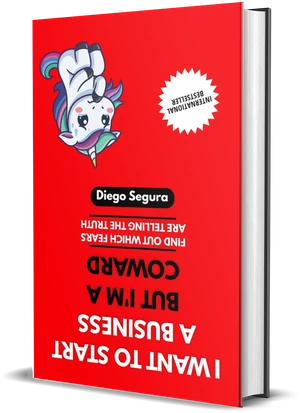
This lesson covers one section of chapter 2, “Afraid people see different odds”. The book goes further, with the full evidence, the stories and every exercise.
Lessons in this chapter.
- 01 Fear distorts sense of time: The Oslo airport lesson.
- 02 Should i trust my fear: What the calm stranger missed.
- 03 Fear vs anger risk taking: Why feelings bend numbers.
- 04 Estimate business failure odds: The blind odds test.
- 05 Wisdom of the crowd within: Why averages beat picking.
- 06 Limits of emotion research: What it can't say about you.
- 07 Ask business owners for advice: Fixes for common snags.