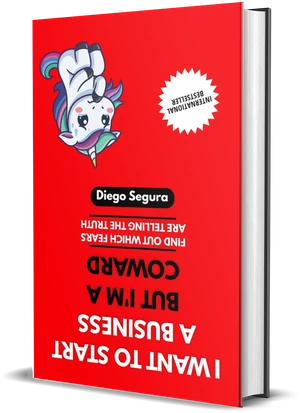


















Loss aversion in decision making: The Price of Safety.
Loss aversion in decision making explains why a fair coin bet feels like a trap. In 1979, Kahneman and Tversky saw losing hurts more than winning pleases. In this chapter you weigh that idea from both sides. First, your savings may protect something real. However, the safe choice has a cost nobody writes down. You will meet the critics and a man who sold 10 per cent of Apple for $800. Finally, an exercise puts both columns on paper.
How loss aversion in decision making tilts your scale.
Chapter 9: The price of the safe choice
Losses loom larger than gains: Why You Refuse Good Bets.
Losses loom larger than gains, so most people refuse a coin bet that pays $150 against $100. Over a hundred flips you would expect to end roughly $2,500 ahead. Still, the loss feels heavier, and that same weight sits on your business decisions.
Emergency fund before starting a business: Smart Order.
Building an emergency fund before starting a business is sensible caution, not cowardice. In 2011, researchers found nearly half of Americans were financially fragile. So if you cannot find $2,000 in thirty days, protect that cushion first.
Opportunity cost neglect: The $300 You Never See.
Opportunity cost neglect means you forget the best thing you give up until someone names it. In a 2009 paper, simply spelling out what money could buy elsewhere changed choices. However, later work found the effect smaller than first claimed.
Checking loss aversion in decision making against your own records.
Loss aversion criticism: How Solid Is the Twice Rule.
Loss aversion criticism argues the twice rule is accepted more widely than the evidence deserves. Yet larger studies still found people loss averse. In short, a loss often weighs more, around twice, but the size moves with person and situation.
Ronald Wayne cofounder: Shrink the Risk, Don't Flee.
Ronald Wayne cofounder of Apple, sold his 10 per cent for $800 on 12 April 1976. His fear of unlimited partnership liability was real. However, Apple incorporated in January 1977, which shows that some risks can be shrunk.
Opportunity cost exercise: Write Your Other Column.
The opportunity cost exercise asks you to write what your savings and evenings actually did over three years. You need about an hour, a sheet of paper and your records. Then both columns finally sit side by side in the same ink.
Ashamed of my finances: Finish the Column Anyway.
If you think "I am ashamed of my finances", the numbers are a record, not a verdict on you. Write the figure, set the page down, and return tomorrow. Also, gaps and good reasons for waiting still belong in the column.