















Are Entrepreneurs Ambiguity Averse: What We Know.
Are entrepreneurs ambiguity averse in a way that stops them starting? Nobody has shown that. In fact, one experiment in China found founders treated unknown odds much like other people, and some unknowns cannot be researched at all.
Not everyone avoids unknown odds.
The limits of ambiguity aversion are real. In 2018, Martin Kocher, Amrei Lahno and Stefan Trautmann published Ambiguity Aversion Is Not Universal. Depending on the situation, some people prefer the vague bet. For example, this happens when the prize is unlikely or when the stakes are losses.
So are entrepreneurs ambiguity averse.
Nobody has shown that disliking unknown odds keeps people from starting businesses. Hakan Holm, Sonja Opper and Victor Nee found founders in China treated unknown odds like others. So the honest question, are entrepreneurs ambiguity averse, remains unmeasured. Therefore, the chapter reasons from research, not founder results.
Trust the exercise because you watched one fear shrink, not because a study promised it.
Unknowns that wait until you act.
Some questions involve uncertainty you cannot research tonight. You cannot know whether strangers will buy, how a competitor will react, or how next year's economy behaves. Those stay uncertain in Knight's sense until you act.
Yet for most of your list, you need information instead of courage. Bravery will not tell you what the permit costs, but an email will.
Test whether you are ambiguity averse, as entrepreneurs ask.
Split your list into questions you can look up and ones only action can answer.
Send one email tonight for a lookup question instead of waiting for courage.
Questions about are entrepreneurs ambiguity averse.
Are entrepreneurs ambiguity averse more than other people?
In the China experiment by Holm, Opper and Nee, founders treated unknown odds much like everyone else.
Is ambiguity aversion universal?
No. Kocher, Lahno and Trautmann found some people prefer vague bets, especially with unlikely prizes or losses.
Which business unknowns cannot be looked up?
Whether strangers will buy, how competitors react and next year's economy. These stay uncertain until you act.
Read the whole chapter.
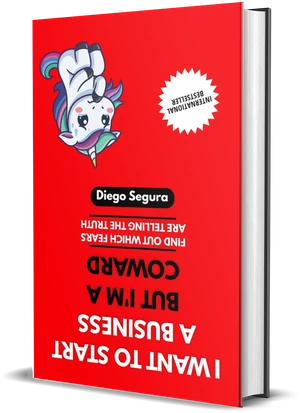
This lesson covers one section of chapter 3, “Unknown is not unlikely”. The book goes further, with the full evidence, the stories and every exercise.
Lessons in this chapter.
- 01 Ellsberg Paradox: Why You Avoid the Unknown Jar.
- 02 Risk vs Uncertainty: Why the Unknown Pays.
- 03 Questions Before Starting a Business: Get One Number.
- 04 Ostrich Effect: Why You Avoid Answers That Sting.
- 05 Plato Laches Courage: Know What Deserves Fear.
- 06 Thales Eclipse Prediction: Unknown Is Not a Warning.
- 07 Are Entrepreneurs Ambiguity Averse: What We Know.
- 08 Startup Costs Higher Than Expected: What to Do Next.