
















Knowing when to quit a startup: why it is a skill.
Knowing when to quit a startup is what better-trained founders learned in a study of 553 startups. They shut down more ventures, and they did it sooner. However, the survivors raised more money and earned more revenue, so quitting was a skill.
What 553 startups revealed.
In a randomized experiment across 12 co-working spaces in the United States, founders with intensive training shut down more often. Esther Bailey and colleagues reported this entrepreneurship training study in a 2026 working paper called Learning to Quit? Also, the survivors raised outside money faster, raised more, and had more employees and revenue. In short, the authors said training can help founders with less viable ventures "rationally quit."
Knowing when to quit a startup without shame.
You have probably heard that winners never quit, from posters, films and friends. So ask yourself honestly: is quitting a business failure? For many trained founders, it was not. Instead, the person who stops is sometimes simply the one who looked at the evidence first. As a result, any shame you carry was built on a story that does not match the data.
When a checked fear should win.
Earlier chapters said fear is a forecast from a mind that is bad at certain arithmetic. Therefore you should check it instead of obeying it. But checking cuts both ways. Sometimes a fear collapses when you look. Sometimes it holds, and then the brave move is to believe it. In short, listening to accurate fear makes you calibrated, not a coward.
Practise knowing when to quit a startup tonight.
Write down one fear about your business idea, then list the evidence for and against it.
Circle whether the fear collapsed or held after checking, and note what would change your mind.
From the book.
Here's the uncomfortable part, and I find it uncomfortable too. The research on people who start businesses suggests that the error often runs the other way. For many would-be founders, the part of the mind that needs checking isn't the frightened part. It's the confident one.
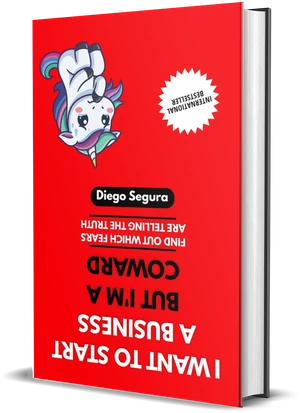
I Want to Start a Business but I'm a Coward, chapter 7: When the coward is right
Questions about knowing when to quit a startup.
What does knowing when to quit a startup have to do with training?
In the study of 553 startups, trained founders quit more and sooner. However, the startups that stayed open performed better.
Does this mean fear is always right?
No. Fear is a forecast, so you check it first and believe it only if it holds.
Were the trained founders worse at business?
No. The training did not make them worse, and the survivors raised more money and hired more people.
Read the whole chapter.
This lesson covers one section of chapter 7, “When the coward is right”. The book goes further, with the full evidence, the stories and every exercise.
Lessons in this chapter.
- 01 Knowing when to quit a startup: why it is a skill.
- 02 Entrepreneur overconfidence bias: who is most wrong.
- 03 Scientific method for startups: let evidence decide.
- 04 Business closure rate in my area: count it yourself.
- 05 Aquinas on courage: why too little fear is a mistake.
- 06 Find closed businesses on maps: fixing bad counts.
- 07 When to abandon a business idea: a four-second lesson.