


















Three month window startup: what the study measured.
The three month window startup figure comes from Jaehu Shim and Per Davidsson in 2018. They found the monthly chance of a business appearing peaks about three months after the process starts. Meanwhile, abandonment risk climbs steadily and crosses it at about seven.
A study built to catch people mid-attempt.
In 2018, Shim and Davidsson at the Queensland University of Technology titled their work "Shorter than we thought". They used the harmonized Panel Study of Entrepreneurial Dynamics, which pools five national studies. Those studies hunt for nascent entrepreneurs, people who had acted but had no business yet. Then they follow each attempt until it resolves. The 1,673 attempts came from the United States, Australia, Sweden and China. Of these, 747 became businesses and 926 ended with somebody stopping.
Three definitions behind the three month window startup claim.
First, the start is the month of the first of at least two gestation activities. The second must follow inside twelve months. Then emergence means money coming in covers expenses and the owner's salary. That is not incorporation, and it is not a launch party. In short, they track the time to first profit new business founders actually reach. Finally, abandonment means everyone on the team stopped working on it.
Rates, not a deadline.
Notice what is missing from those three careful definitions. Nobody measures how much you want it, or whether you are ready. Instead, they measure dates, so you can check all of this alone tonight. So the three month window startup finding describes rates, not odds hitting zero. At seven months, exit simply becomes likelier than arrival for attempts still running.
Read the three month window startup finding correctly.
Write the three definitions on one card: start, emergence and abandonment.
Under them, write "rates, not a deadline" and keep the card beside your notes.
From the book.
I would like you to notice what is missing from those three definitions, because the same thing is missing from the studies in this book: nobody is measuring how much you want it, nobody is measuring whether your idea is any good, and nobody anywhere is measuring whether you're ready, or whether you've finally found the thing you were supposed to do with your life. They're measuring dates. Something happened in one month, something else happened in another, and the distance between those two months is the finding.
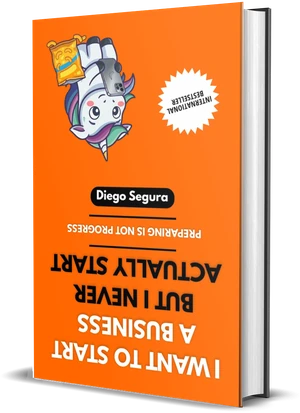
I Want to Start a Business but I Never Actually Start, chapter 2: The three-month window
Questions about three month window startup.
Does the three month window startup finding mean month nine is too late?
No, it describes monthly rates for attempts still running. It never says a business started in month nine cannot work.
What counts as a business existing in this research?
Emergence is the month when money coming in covers expenses and the owner's salary. So incorporation or a launch party does not count.
Who were the people in the sample?
They were nascent entrepreneurs, people who had done something about a business but did not yet have one.
Read the whole chapter.
This lesson covers one section of chapter 2, “The three-month window”. The book goes further, with the full evidence, the stories and every exercise.
Lessons in this chapter.
- 01 When did my business idea start: date the first act.
- 02 Three month window startup: what the study measured.
- 03 Failed ventures take longer: why stopping is so hard.
- 04 Business idea timeline exercise: count your months.
- 05 Clinkle startup story: three years, no public product.
- 06 Buffer pricing page experiment: strangers and a price.
- 07 Length biased sampling: what the study cannot prove.
- 08 Busywork instead of real progress: five dating traps.