


















Failed ventures take longer: why stopping is so hard.
Failed ventures take longer than successful ones in the Shim and Davidsson data. After weighting, the median attempt that produced a business took seven months, while abandoned attempts took twelve. Their reading is that money decides a business appearing, but giving up must be chosen.
Why failed ventures take longer than you picture.
You probably picture failures as quick, the ones that flame out in a fortnight. However, the abandoned attempts were the long, patient, careful ones with the most evenings in them. Also, these attempts burn almost no money at all. There is no landlord, no payroll and no investor wanting a number by Thursday. So nothing outside ever forces the question of whether this is still happening.
One event happens to you, the other you choose.
A business appearing is an objective event, decided by money in and costs out. Giving up, by contrast, is a decision made inside your own head. That is why quitting a project is hard when nothing pushes you. As a result, failed ventures take longer, because no single event forces the ending. So ask what would have to happen for you to stop and say it aloud.
Even large firms struggle to end experiments.
In 2014, William Kerr, Ramana Nanda and Matthew Rhodes-Kropf at Harvard Business School described entrepreneurship as experimentation. They argued the hard part is not starting an experiment but terminating one. Some of the best venture capital firms are among the most willing to abandon projects. Meanwhile, large companies find killing a failing experiment hard, partly because of how stopping looks. However, the authors note those firms also pick better projects to begin with.
Why failed ventures take longer: name your stop event.
Write one sentence describing what would actually have to happen for you to stop.
If you cannot name any such event, write that down plainly too.
From the book.
After weighting, the median attempt that produced a business took seven months, and the median attempt that got abandoned took twelve, which means the ones that died were not the quick failures you are picturing, the ones that flame out in a fortnight and get laughed about afterwards. They were the long ones. They were the patient, sensible, careful ones, the ones with the most evenings in them.
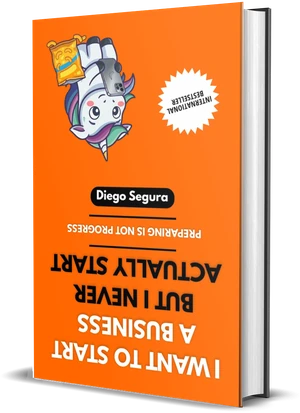
I Want to Start a Business but I Never Actually Start, chapter 2: The three-month window
Questions about failed ventures take longer.
Why do failed ventures take longer than successful ones?
Money decides whether a business appears, but giving up is a decision you must make. Nothing outside forces that decision.
Is quitting the same as losing interest over time?
No, the chapter means stopping and saying so aloud to another person. Drifting quietly over a winter does not count.
Do big companies have the same problem?
Kerr, Nanda and Rhodes-Kropf note large companies struggle to stop experiments that are not working. However, they say comparing failure rates alone does not settle it.
Read the whole chapter.
This lesson covers one section of chapter 2, “The three-month window”. The book goes further, with the full evidence, the stories and every exercise.
Lessons in this chapter.
- 01 When did my business idea start: date the first act.
- 02 Three month window startup: what the study measured.
- 03 Failed ventures take longer: why stopping is so hard.
- 04 Business idea timeline exercise: count your months.
- 05 Clinkle startup story: three years, no public product.
- 06 Buffer pricing page experiment: strangers and a price.
- 07 Length biased sampling: what the study cannot prove.
- 08 Busywork instead of real progress: five dating traps.