


















Hyperbolic discounting explained: model, not data.
Hyperbolic discounting explained in one line: two famous papers modelled how valuing time a certain way makes preferences shift over time. However, they are theory. Neither paper measured a single human being, so they show what would follow, not what is happening to you.
Two papers that named the shape.
In 1997 David Laibson published a paper in the Quarterly Journal of Economics. The Laibson hyperbolic discounting model argues that this shape produces time inconsistent preferences. As a result, a person has a reason to want to constrain their own future choices.
Two years later, Ted O'Donoghue and Matthew Rabin published a study in the American Economic Review. They modelled self-control problems as present-biased preferences, for an activity done exactly once.
Doing a thing exactly once.
Stay with that phrase, because it fits your situation better than your own story does. You are not trying to build a daily habit. Instead, you are trying to do one thing, one time.
Hyperbolic discounting explained as a model, not a measurement.
Both papers carry a real limitation, since they are theoretical. They are arguments about what would follow if people valued time in a particular way. So when present bias is cited at you, ask which kind of paper it came from. The Greek and Tetris study is a measurement, while Laibson is a model. A model does not tell you the mechanism is running in your kitchen.
Use hyperbolic discounting explained to check your sources.
Pick one claim about procrastination you believe, and write whether it came from a model or a measurement.
Write the phrase "exactly once" in your notes, then write the one thing you are trying to do once.
From the book.
Both of those papers carry a limitation, and it is a real one rather than a formality. They are theoretical. Neither one measured a single human being. They are models, which is to say arguments about what would follow if people valued time in a particular way, and they are famous because the shape turned out to be useful, not because either paper ever watched anybody fail to start a business.
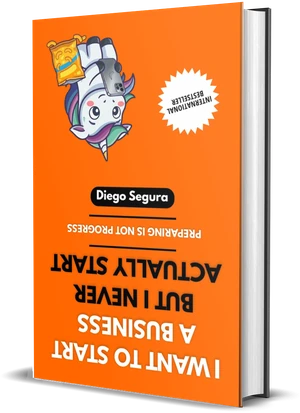
I Want to Start a Business but I Never Actually Start, chapter 8: Why later always wins
Questions about hyperbolic discounting explained.
Is hyperbolic discounting explained by real data on people?
Not in these two papers. Both are theoretical models, and neither one measured a single human being.
Why are these papers famous then?
Because the shape turned out to be useful. They never watched anybody fail to start a business.
What did O'Donoghue and Rabin look at?
They examined self-control problems modelled as present-biased preferences, where somebody has to do an activity exactly once.
Read the whole chapter.
This lesson covers one section of chapter 8, “Why later always wins”. The book goes further, with the full evidence, the stories and every exercise.
Lessons in this chapter.
- 01 Present bias for effort: why Thursday shrinks.
- 02 Hyperbolic discounting explained: model, not data.
- 03 Commitment device psychology: why 59 per cent chose it.
- 04 Does caring more cause procrastination: no one knows.
- 05 Are entrepreneurs more impatient: about time, yes.
- 06 Accountability partner for goals: one line tonight.
- 07 What if I still don't do it: read the result.
- 08 Augustine on akrasia: the garden and the Greek.