


















Are entrepreneurs more impatient: about time, yes.
Are entrepreneurs more impatient about time? In one 2024 paper, founders discounted future time investments more heavily than salaried workers, not less. So the pull you feel is not what separates you from people who started. Still, the findings carry four serious hedges.
Three studies, one surprise.
In 2024 Cédric Gutierrez, Randolph Sloof and Donal Crilly published a paper in Organization Science. This founders time preferences study had three parts. First, it followed graduate business students and their occupational choices three years later. Then two more studies compared recent startup founders with salaried workers.
Are entrepreneurs more impatient than employees.
The results run the opposite way to what you would expect. People who discounted future time investments most heavily were more likely to become entrepreneurs. Also, entrepreneurs discount future time more heavily than employees, yet were not more patient about future money. As a result, the impatience linked to founding was about time, which lines up with the Greek.
Four hedges worth keeping.
The author could not read the sample sizes or the countries behind the data. He also could not confirm whether the first study predicts entry. Founding might change the preference, since the difference fades with experience. Therefore the authors call their account "suggestive". What survives is narrow: no evidence shows the people who started felt the pull less.
Act on are entrepreneurs more impatient tonight.
Write one sentence you use to explain why founders are different from you.
Cross it out, and below it write: the people who started felt this pull too.
From the book.
What they report runs the opposite way to what you would expect. The people who discounted future time investments most heavily were more likely to hold strong entrepreneurial intentions, and more likely to become entrepreneurs. The founders in the follow-up studies discounted future time more heavily than the employees did, not less. They also report that founders were not more patient about future money, which lines up with the Greek: the impatience travelling with founding was impatience about time.
I Want to Start a Business but I Never Actually Start, chapter 8: Why later always wins
Questions about are entrepreneurs more impatient.
So are entrepreneurs more impatient than salaried workers?
In this paper, founders discounted future time more heavily, not less. They were not more patient about future money.
Does the difference last over time?
The paper reports it fades with entrepreneurial experience. That suggests the work itself may produce it.
How strong is this evidence?
The authors call their account "suggestive" and their analyses "exploratory". Also, sample sizes and countries could not be read.
Read the whole chapter.
This lesson covers one section of chapter 8, “Why later always wins”. The book goes further, with the full evidence, the stories and every exercise.
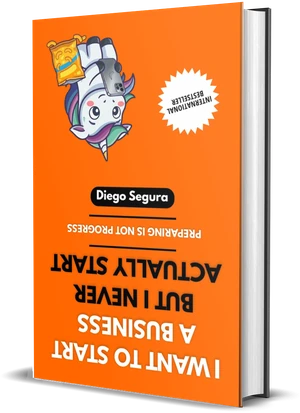
Lessons in this chapter.
- 01 Present bias for effort: why Thursday shrinks.
- 02 Hyperbolic discounting explained: model, not data.
- 03 Commitment device psychology: why 59 per cent chose it.
- 04 Does caring more cause procrastination: no one knows.
- 05 Are entrepreneurs more impatient: about time, yes.
- 06 Accountability partner for goals: one line tonight.
- 07 What if I still don't do it: read the result.
- 08 Augustine on akrasia: the garden and the Greek.