


















Implementation Intentions: Turn a Wish Into Thursday.
Implementation intentions specify when, where and how you will act, while a goal intention only states a wish. A loose decision to make a sale is worth almost nothing. Instead, write an if-then sentence with real names, a day and a price.
Two kinds of intention.
In 1999 Peter Gollwitzer published a paper in American Psychologist on two kinds of intention. A goal intention says "I intend to reach Z". By contrast, the other says, "Whenever situation x arises, I will initiate the goal-directed response y!" So one specifies action, and the other specifies hope.
What the evidence says about implementation intentions.
Gollwitzer and Paschal Sheeran later pooled ninety-four studies covering more than eight thousand people. They found a medium-to-large effect, a d of nought point six five. That favoured people using the if then planning technique over those who merely intended something. Also, it removes the moment of deciding, which is where you usually lose.
For example: when I finish work on Thursday, I will message three people and ask each for forty dollars.
Limits, and the time you will need.
The effect is weakest on goals that are too easy or for people never really motivated. Also, it collapses when the plan is vague. Then there is timing. In the planning fallacy thesis study from 1994, students predicted thirty-four days on average. Their worst case was forty-nine, yet most blew through it.
Write your implementation intentions tonight.
Write one if-then sentence naming a day, a time, three people and a price.
Take your delivery estimate, add extra time beyond your worst case, and set the date from that.
From the book.
In 1999 Peter Gollwitzer published a paper in American Psychologist on the difference between two kinds of intention, and the distinction is worth more to you than most of what you will read this year. A goal intention has the shape "I intend to reach Z". An implementation intention has the shape, in his own words, "Whenever situation x arises, I will initiate the goal-directed response y!"
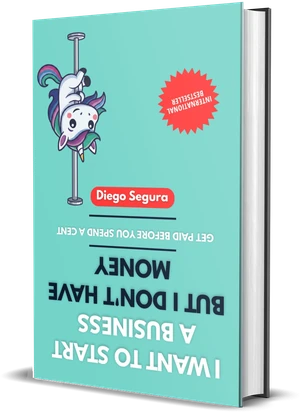
I Want to Start a Business but I Don't Have Money, chapter 5: The first dollar
Questions about implementation intentions.
What are implementation intentions?
They are if-then plans that say when, where and how you will act. A goal intention only names the outcome.
When do if-then plans fail?
They do little when goals are too easy or motivation is missing. They also collapse when the plan is vague.
Why add time to your delivery date?
Because people underestimate how long things take. In the thesis study, most students finished past their own worst-case estimate.
Read the whole chapter.
This lesson covers one section of chapter 5, “The first dollar”. The book goes further, with the full evidence, the stories and every exercise.
Lessons in this chapter.
- 01 Selling Stuff at School as a Kid: The Watch Lesson.
- 02 What Counts as a Real Sale: Money From a Stranger.
- 03 People Underestimate Compliance: How Many Say Yes.
- 04 Implementation Intentions: Turn a Wish Into Thursday.
- 05 Social Rejection Physical Pain: Why a No Hurts.
- 06 Does Selling to Family Count: Why Your Mother Is Not a Market.
- 07 Homemade Pickle Business: Four Kilograms to a Company.