


















Consultant stuck trading time for money: why it stalls.
A consultant stuck trading time for money keeps saying yes to the next fifteen thousand dollar wire. Because that cash arrives this month, the product build always waits. In short, urgent money beats long-term potential every time it is offered.
The same demo email, word for word.
In October 2025, the author sat in a Palo Alto café rebuilding an onboarding pipeline. Then another chief executive emailed the same line: can you just look at our demo. He had nearly a dozen of these engagements behind him. Each paid fifteen thousand dollars for a three-week, sixty-hour sprint. So he was no longer doing strategy. He was a consultant stuck trading time for money, running a repair shop with a very good address.
The price of saying no to forty-five thousand dollars.
To build a standardised platform and playbook, he turned down three inbound requests over four months. That came to forty-five thousand dollars of guaranteed money he did not take. However, his costs stayed the same while his income fell off a cliff. He spent about two hundred unbilled hours on wireframes and code instead. The gap between consulting income vs product income felt brutal from the inside.
Why a consultant stuck trading time for money stays stuck.
Every time the build hit a technical wall, a founder offered a clean fifteen thousand dollar wire. So he kept one foot in consulting because it paid this month. As a result, the product sat at eighty per cent finished, waiting for next month. That is the consulting money trap, because the fast fee always looks safer than the unfinished build. A consultant stuck trading time for money rarely notices when the product stopped moving.
Tonight's check for a consultant stuck trading time for money.
List every task you have done by hand five times or more this year.
Write the client's exact request sentence next to each one, word for word.
From the book.
The gravity of quick consulting money was simply stronger than I was, and every single time the build hit a technical wall or the framework turned out to be too rigid for somebody's particular edge case, a founder would appear offering a clean fifteen thousand dollar wire to come and do it by hand. Urgent cash beat long-term potential every time it was offered, which was often. I kept one foot in the consulting bucket because it paid this month, and the product sat at eighty per cent finished, waiting for a next month that kept not arriving.
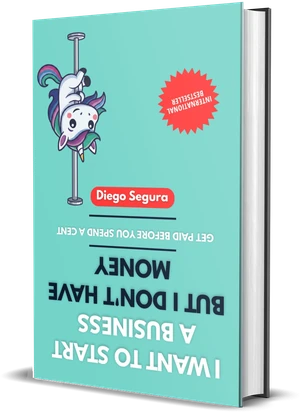
I Want to Start a Business but I Don't Have Money, chapter 8: The service to product pivot
Questions about consultant stuck trading time for money.
How does a consultant stuck trading time for money end up with an unfinished product?
Urgent fees keep arriving whenever the build hits a wall. Because they pay now, the product waits at eighty per cent.
Did turning down paid work fix the problem?
Not fully. He refused forty-five thousand dollars, but later offers still pulled him back into custom work.
What question should you ask yourself after this lesson?
Ask what you are still doing by hand for the fifth time. That repeated task is your starting point.
Read the whole chapter.
This lesson covers one section of chapter 8, “The service to product pivot”. The book goes further, with the full evidence, the stories and every exercise.
Lessons in this chapter.
- 01 Consultant stuck trading time for money: why it stalls.
- 02 Service to product model: build for one, sell to all.
- 03 Productized service vs product: pick the right rung.
- 04 Basecamp origin story: one year versus six.
- 05 What service to productize: the one you repeat.
- 06 Why side products never launch: two clocks at once.
- 07 Productizing pitfalls: three things that break.