


















William Morris useful work: the three hopes test.
William Morris useful work, as he described it in an 1884 lecture in Hampstead, holds three hopes. They are hope of rest, hope of product and hope of pleasure in the work itself. So the real question is which of the three your own work lacks.
The three hopes from a Hampstead lecture.
In 1884, Morris asked a liberal club what hope makes work worth doing. His answer, the core of William Morris useful work, had three parts in real amounts. Rest had to be worth having, and product had to satisfy someone neither a fool nor an ascetic. Also, pleasure had to be noticed while working, not missed like a habit.
A famous quote he never wrote.
A line about useful work versus useless toil is attributed to Morris everywhere. However, he never wrote it, because somebody paraphrased him and quotation marks crept in. The author nearly printed it, since that is how it sat in his notes. Morris's actual words are better, because they name three conditions instead of one slogan.
William Morris useful work needs no company.
Notice that none of the three hopes requires owning a business. So what makes work meaningful here is a condition, not a legal structure. Therefore William Morris useful work says nothing about who signs your payslip. Instead, it asks you to name which hope is gone, then ask whether leaving is truly the cheapest way back.
Test your job against William Morris useful work.
Write rest, product and pleasure on a page, and mark the one that is missing.
Beside it, list every route besides leaving that might restore that one hope.
From the book.
Look at those three hopes again and notice that not one of them requires you to own a company. Rest, product, pleasure in the work. Every one of them describes a condition rather than a legal structure, so what Morris is describing is what makes work bearable, and none of it says anything whatever about who signs your payslip.
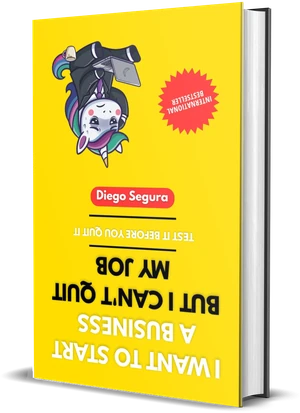
I Want to Start a Business but I Can't Quit My Job, chapter 13: Staying is allowed, and it can be the win
Questions about William Morris useful work.
What are the three hopes in William Morris useful work?
Hope of rest, hope of product, and hope of pleasure in the work itself. Each must be present in real amounts, not token ones.
Did Morris say hope makes work sweet and useless toil a curse?
No, that line is a paraphrase that gained quotation marks. He said work with the three hopes is not far from a blessing.
Why does it matter which hope is missing?
Because missing pleasure and missing weekends have completely different solutions. However, most people cannot name which one is gone, so they reach for the largest lever.
Read the whole chapter.
This lesson covers one section of chapter 13, “Staying is allowed, and it can be the win”. The book goes further, with the full evidence, the stories and every exercise.
Lessons in this chapter.
- 01 How to ask your boss for changes: the odds favour you.
- 02 William Morris useful work: the three hopes test.
- 03 Four day week trial results: promise and limits.
- 04 Flexible working request letter: number, date, review.
- 05 Job crafting: add the good, claim the training money.
- 06 Self employed median income: the hidden hourly gap.
- 07 Flexibility stigma at work: the real cost of staying.
- 08 Part time request denied: what Rasmus Dall did next.