


















Self employed job satisfaction: why it is real.
Yes, and in fact self employed job satisfaction is real and substantially higher than what employees report. Specifically, researchers found that between half and four fifths of the gap comes from two things. First, the work is more interesting, and second, people get to decide. However, money, security and prospects do not explain it.
What a sunny Thursday reveals.
To begin, an Italian time-use study matched detailed daily diaries against the weather. As a result, a clear pattern appears: when the sun comes out, self-employed people work less and go outside more. Employees, by contrast, mostly don't. Moreover, the gap between them is large and consistent. So this is not a survey about how autonomous people feel. Instead, it shows what they actually did on a nice Thursday.
Where self employed job satisfaction comes from.
For example, three quarters of self-employed people not tied to an app report high control over their schedule. Among employees, however, the figure is about four in ten. Also, across twenty-three countries, the self-employed report substantially higher satisfaction. Yet the gap is not about money, security or prospects. Instead, interesting work and the power to decide explain between half and four fifths of it.
They got exactly what they paid for.
So these people were not deluded, and they were not lying to the survey. After all, they wanted autonomy and interesting work, then paid for it in hours and safety. As a result, they received precisely what they had bought. In short, self employed job satisfaction is available to people who go looking for it. However, the real problem is that almost nobody looks at the price first.
Measure your own self employed job satisfaction gap.
First, write down what you did on your last sunny weekday, and what you wanted to do instead.
Then note whether you have high control over your schedule, like three quarters of the self-employed.
From the book.
Here's the part that decides this chapter. Researchers went looking for what explains that satisfaction gap, and it isn't the money, and it isn't the security, and it isn't the prospects. Between half and four fifths of the whole difference comes down to two things. The work is more interesting, and they get to decide.
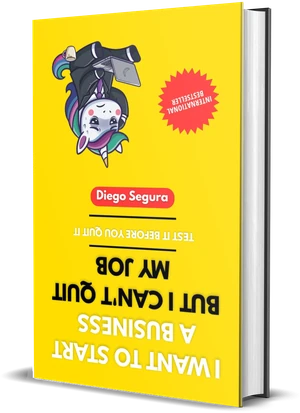
I Want to Start a Business but I Can't Quit My Job, chapter 4: What you are actually buying
Questions about self employed job satisfaction.
Is self employed job satisfaction higher than an employee's?
Yes. In fact, across twenty-three countries the self-employed report substantially higher job satisfaction than employees do.
Does money explain why the self-employed feel more satisfied?
No, because money, security and prospects do not explain the gap. Instead, more interesting work and deciding for yourself explain most of it.
How much schedule control do self-employed people report?
Specifically, three quarters of those not tied to an app report high control. Among employees, by contrast, it is about four in ten.
Read the whole chapter.
This lesson covers one section of chapter 4, “What you are actually buying”. The book goes further, with the full evidence, the stories and every exercise.
Lessons in this chapter.
- 01 Reasons for starting a business: what you really buy.
- 02 Self employed working hours: the six-hour price.
- 03 Self employed job satisfaction: why it is real.
- 04 Flexible work arrangements: price what you want.
- 05 Lifestyle business: small on purpose, not by accident.
- 06 Quitting job to open a cafe: count before you leap.
- 07 Revenue vs take home pay: the contract I refused.