


















Lifestyle business: small on purpose, not by accident.
A lifestyle business, one that deliberately stays small, is not a lesser version of something bigger. Indeed, Paul Jarvis argues staying small brings freedom and avoids growth headaches. However, the choice only counts if you make it knowingly, after looking at the price.
Paul Jarvis and the case for staying small.
Paul Jarvis wrote a book called Company of One, and he thinks the growth frame is wrong. In fact, in his words, staying small "provides one with the freedom to pursue more meaningful pleasures in life." So notice whether that sentence loosens something in your chest. That reaction tells you more about what you want than any exercise in the book.
Why a lifestyle business is not a lesser one.
Hurst and Pugsley describe a population that mostly does not want to grow, and they treat that as a finding about ambition. Jarvis, instead, says these are the people who worked it out. In other words, he sees the growth assumption as a cultural habit rather than an economic truth. Also, he argues growth pushes people into debt and into hiring too early. In his view, a lifestyle business avoids losing the very thing people left to get.
Choose it deliberately or not at all.
Diego thinks Jarvis is largely right, but the two answer different questions. In short, Jarvis asks which choice is better, while Diego asks whether you know which one you are making. The business, hours and money may be identical, yet your relationship with your life differs completely. So you are allowed to want the small version. However, what you cannot do is arrive there by accident and then say you meant it.
Decide on a lifestyle business with open eyes.
First, read the Jarvis quote again and note honestly whether it made you feel relief.
Then write one line stating whether you want to grow or stay small, and why.
From the book.
So take his side if you want it. You are allowed to want the small version. What you are not allowed to do, if you want this book to be any use to you, is arrive there by accident and then say you meant it.
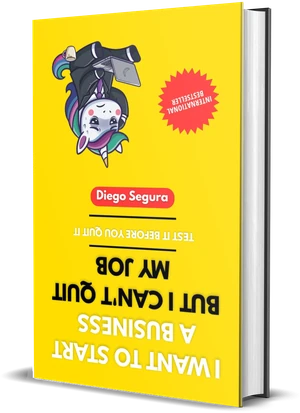
I Want to Start a Business but I Can't Quit My Job, chapter 4: What you are actually buying
Questions about lifestyle business.
Is a lifestyle business less ambitious than a growth business?
Not necessarily, because Jarvis sees the growth assumption as a cultural habit rather than an economic truth. Diego thinks he is largely right.
What risks does chasing growth carry for a small owner?
Jarvis argues it pushes people into debt and hiring too early. As a result, they can lose the thing they left to get.
What makes choosing to stay small a valid decision?
Making the choice deliberately, after looking at the price. Ending up small and calling it a choice afterwards is entirely different.
Read the whole chapter.
This lesson covers one section of chapter 4, “What you are actually buying”. The book goes further, with the full evidence, the stories and every exercise.
Lessons in this chapter.
- 01 Reasons for starting a business: what you really buy.
- 02 Self employed working hours: the six-hour price.
- 03 Self employed job satisfaction: why it is real.
- 04 Flexible work arrangements: price what you want.
- 05 Lifestyle business: small on purpose, not by accident.
- 06 Quitting job to open a cafe: count before you leap.
- 07 Revenue vs take home pay: the contract I refused.