


















Reversal test: would you take your job again.
The reversal test asks you to imagine your business already runs and pays what you need. Then someone offers your exact current job, salary, manager and commute. If you would not take it, something other than merit holds you there.
How the reversal test works.
Nick Bostrom and Toby Ord set it out in the journal Ethics in 2006. Their point was simple: refusing to move toward where you already are reveals another force. Investors also ask whether they would buy a stock today at this price. If not, it stays only because it is already there.
Waiting can have real value.
However, not deciding can genuinely be correct. Avinash Dixit and Robert Pindyck showed that waiting has value when moves are irreversible and the future is uncertain. For example, firms set hurdle rates three or four times their cost of capital. So your job can work as an option on information about savings, appetite and your idea.
A question that forces one decision.
Steve Clarke also argues the test leaves its burden of proof unclear and its range narrow. Therefore the question settles nothing alone. Instead, it forces the decision to happen once, in your handwriting. If you would honestly take the job again, you have chosen it, possibly for the first time.
Run the reversal test in writing.
Write a full paragraph answering whether you would take your current job back.
Then add it to your page from chapter 1, under the fortnight of ratings.
From the book.
This is not a trick I invented. Nick Bostrom and Toby Ord set it out formally in the journal Ethics in 2006 and called it the reversal test, and their point was that if you would not move toward a position you are already in, something other than the merits is holding you there. Investors run the same move on a stock they own. Would I buy this today, at this price, knowing what I know? If not, the only thing keeping it in the portfolio is that it is already in the portfolio.
I Want to Start a Business but I Can't Quit My Job, chapter 7: Why you have not decided already
Questions about reversal test.
Is the reversal test a reliable decision rule?
Not on its own, and critics like Steve Clarke question it. It does, however, make you decide explicitly once.
Why write a paragraph instead of one word?
Because the word is easy. The paragraph is where you discover what you actually think.
Can staying be the right answer?
Yes. Each month you stay can teach you more about your industry, savings and idea.
Read the whole chapter.
This lesson covers one section of chapter 7, “Why you have not decided already”. The book goes further, with the full evidence, the stories and every exercise.
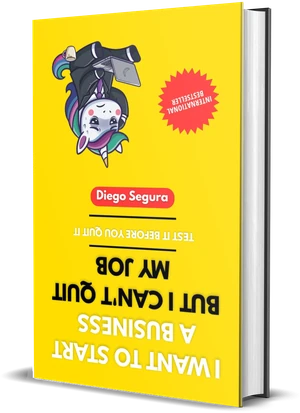
Lessons in this chapter.
- 01 Status quo bias examples: why your job never ends.
- 02 Omission bias: why not acting feels safer.
- 03 Career inaction: when staying is just a default.
- 04 Reversal test: would you take your job again.
- 05 When to kill a side project: the day you knew.
- 06 Parents chose my career: the first step was theirs.
- 07 Should I quit my job test: reading your answer.