


















Financial infidelity in relationships: Your Plan.
Financial infidelity in relationships means deliberately hiding a financial behaviour you expect your partner would disapprove of. So a plan that spends, saves or risks shared money can fit that definition. Therefore, never keep it from whoever shares your home, money or time.
Shame weighs more than guilt.
In 2020, Slepian, James Kirby and Elise Kalokerinos studied about 1,000 people keeping more than 6,000 secrets. Shame was linked with more mind-wandering, while guilt was linked with less. The shame vs guilt secrets difference matters because shame concerns who you are. So if you fear looking foolish or ungrateful, your secret probably carries shame.
Where financial infidelity in relationships begins.
Also in 2020, Emily Garbinsky, Joe Gladstone, Hristina Nikolova and Jenny Olson defined the term. High scorers on their scale preferred discreet payments, unmarked packages and private bank details. However, the study doesn't measure what secrecy does to a relationship. Still, read that definition of financial infidelity in relationships with your plan in mind. A plan that is found out starts life as a betrayal.
Confiding in one person.
In 2019, Slepian and Edythe Moulton-Tetlock found that confiding a secret went with higher well-being. It helped people feel able to cope and think about it less. Here is how to tell your partner about your business: pick a quiet time, not an argument or a family meal. Then lead with facts, say what you need, and listen before you defend anything.
Avoid financial infidelity in relationships this week.
Write down what your plan has used so far in money and time.
Ask your partner for a quiet half hour, away from arguments and family meals.
From the book.
This is the line I'd draw. Keep your plan from the market if you must: from competitors, and from people who could copy it. Keep it, for now, from the wider family and the town, if chapter 4 has convinced you that announcements do more harm than good. But don't keep it from whoever shares your home, or from anyone whose money, home or time it touches. Those are the secrets that tend to be found out rather than told, and a plan that is found out starts its life as a betrayal instead of an idea. Don't let yours.
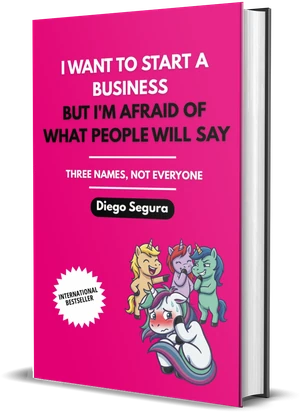
I Want to Start a Business but I'm Afraid of What People Will Say, chapter 9: The secret has a price too
Questions about financial infidelity in relationships.
Is a secret business plan financial infidelity in relationships?
By the researchers' definition it can be, if you hide spending or risk you expect your partner to disapprove of.
Where should I draw the line on secrecy?
Keep it from competitors if you must, but never from whoever shares your home, money or time.
What if my partner assumes I want money?
Say what you need from them, and if the honest answer is nothing, say that too.
Read the whole chapter.
This lesson covers one section of chapter 9, “The secret has a price too”. The book goes further, with the full evidence, the stories and every exercise.
Lessons in this chapter.
- 01 Keeping a mistake secret at work: The Real Price.
- 02 Why secrets weigh on you: The Mind-Wandering Cost.
- 03 How to stop thinking about a secret: The Count.
- 04 Jane Lu fake job story: What the Secret Protected.
- 05 Financial infidelity in relationships: Your Plan.
- 06 Keep side hustle secret from employer: When Quiet Works.
- 07 Partner upset I hid my business: What to Do Next.