


















Does public commitment work: the Stanford workshop test.
Does public commitment work? In one 2017 field experiment it did, because students committed more when a director they knew saw their choice. However, that director was one specific person, and he saw one specific action.
The advice you have probably heard.
People often tell you to announce goals to stay accountable, so you post it and say it at dinner. Then, the theory goes, embarrassment stops you from backing out. It sounds sensible, and there is real evidence on its side.
Does public commitment work in a real experiment.
Christine Exley of Harvard Business School and Jeffrey Naecker of Wesleyan University ran this commitment device study with Stanford undergraduates. Each student could risk up to fifteen dollars, lost if they skipped a workshop.
When the choice stayed private, forty-one percent put money at risk. But when the programme director would see it, sixty-five percent did. Also, the share risking the full fifteen jumped from thirty-one percent to fifty-five.
The detail that changes everything.
Look closely at who saw the choice. One person the students knew saw one commitment about turning up on a particular day. No crowd heard an announcement, and nobody declared who they would become.
Test whether does public commitment work for your own plan.
Write down one specific action you will take this week, with a day attached.
Then choose one person you know to see that action, instead of posting it.
From the book.
The advice goes like this: if you want to make sure you actually start the business, tell everyone. Post it. Announce it at dinner. Put it in your profile. Once people know, you will be too embarrassed to back out, and the pressure of all those eyes will carry you through the days when you would rather quit.
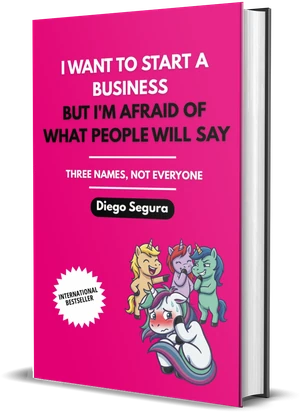
I Want to Start a Business but I'm Afraid of What People Will Say, chapter 4: Don't Announce it, ask
Questions about does public commitment work.
Does public commitment work for everyone who announces a goal?
Not necessarily. In this study, it worked when one known person saw one specific action.
How much money could the Stanford students put at risk?
Each student could put up to fifteen dollars of their own money at risk.
Who saw the students' choice in the public condition?
The programme director who ran the workshops saw it, and he personally knew most of them.
Read the whole chapter.
This lesson covers one section of chapter 4, “Don't Announce it, ask”. The book goes further, with the full evidence, the stories and every exercise.
Lessons in this chapter.
- 01 Does public commitment work: the Stanford workshop test.
- 02 Gollwitzer 2009 study: the four minutes that vanished.
- 03 Symbolic self completion theory: praise before work.
- 04 Public accountability backfires: crowds versus one ask.
- 05 Phil Knight crazy idea: one ask beat a silent room.
- 06 How to ask for an introduction: one small request.
- 07 Mistakes when asking for help: five ways asks fail.
- 08 Amour propre vs amour de soi: why praise comes too soon.