


















Write a Stop Condition: What Arrives, From Whom.
To write a stop condition, fill in this sentence: "I will stop doing this when ______ arrives from ______". The first blank holds a thing, not a feeling. The second names a person whose reply is still outstanding tonight.
Pick one activity, not the project.
Start with the activity that will fill your evening tonight. If several qualify, pick the one you would defend fastest over dinner. Because that speed is the tell, it points to the right choice. Write one sentence for one activity, and do not write a second. That is how you define done for a task.
The rules for each blank when you write a stop condition.
The first blank holds a reply, a payment, a signature, a quote, a refusal or a delivery date. Here is the test: could it be true Tuesday and false Thursday depending on sleep? Then it is a feeling wearing a coat. However, the second blank needs somebody you are waiting on now, not someone who might see finished work.
A worked example with a pricing page.
Suppose tonight you are rebuilding your pricing page for the fourth time. "I will stop when the pricing page is right" fails both blanks. Instead, try stopping when a quote comes back from the supplier you emailed on Tuesday. Among stop condition examples, that one stings, because it admits the page was never the blocker.
Finally, ask whether a stranger could say next month if it came true. If yes, you managed to write a stop condition, so add today's date beneath it. If no, you learned what the activity really is. In short, each time you write a stop condition, you gain information.
Write a stop condition before tonight's session.
Fill in both blanks for the one activity you would defend fastest tonight.
Read it back, ask if a stranger could check it, then write today's date.
From the book.
The first blank holds a thing rather than a feeling. A reply, a payment, a signature, a quote, a refusal, a delivery date, a number on somebody else's screen. Here is the test for it: could the same entry be true on Tuesday and false on Thursday, depending on nothing but how well you slept? Then it's a feeling wearing a coat, and it doesn't go in the blank.
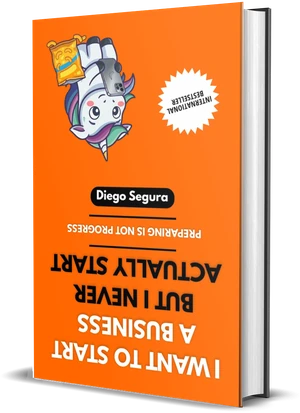
I Want to Start a Business but I Never Actually Start, chapter 5: Preparation and its stop condition
Questions about write a stop condition.
How do I write a stop condition that works?
Use the sentence "I will stop doing this when ______ arrives from ______." Put a real thing in the first blank and a person in the second.
How can I tell if my first blank is a feeling?
Ask whether it could be true Tuesday and false Thursday depending only on sleep. If so, it is a feeling.
Why add today's date under the sentence?
Because you will want to know how long it took to arrive. A date also turns the sentence into a record.
Read the whole chapter.
This lesson covers one section of chapter 5, “Preparation and its stop condition”. The book goes further, with the full evidence, the stories and every exercise.
Lessons in this chapter.
- 01 Preparation Without a Finish Line: Spot It Tonight.
- 02 Does Business Planning Help: What 46 Studies Say.
- 03 Business Plan Survival Study: Why It Cannot Grade You.
- 04 Set a Stop Rule in Advance: Thirty-One Days to a Sale.
- 05 Side Project That Never Ends: Why Nobody Is Waiting.
- 06 Write a Stop Condition: What Arrives, From Whom.
- 07 Waiting for Permission to Start: Name Who You Need.