


















Correlation vs causation in startups: what survives.
The question of correlation vs causation in startups is the strongest case against this chapter. Renting premises or registering a company may simply be what a business is. However, one smaller claim survives: the dividing line was the direction of effort.
The objection, stated first.
You could say the whole finding is circular. People with a business had naturally done more of the acts that put one in front of others. Renting a place, getting money in and hiring someone are, in large part, the business itself. So the study might only say that people who have a business have a business.
Also, in your own case, you may not need premises or staff yet. On that reading, asking for visible acts first is asking for smoke before a fire.
What survives correlation vs causation in startups.
That objection is a good one, and the text admits it cannot fully answer it. But if the finding were only circular, those still trying would have been doing less. Instead, the paper describes them working steadily at a different kind of act. They saved money and wrote plans, where only they could answer. As a result, they were busy but not productive startup builders, short of replies rather than evenings.
A smaller claim worth your time.
So the dividing line is not effort, hours or how badly anybody wanted it. It is effort direction vs effort amount, and direction is what counts. Still, the 1996 research never compares months of private preparation against months where answers were possible. As far as the author can find, nobody has run that comparison directly. In short, keep correlation vs causation in startups in mind, and hold the narrow claim lightly.
Test correlation vs causation in startups on your own list.
Mark each line on your page as either "only I can answer" or "someone could answer".
Count which kind of act took most of your evenings this past month.
From the book.
It also leaves your real question untouched either way, because nothing in that 1996 research compares the months you spend preparing where nobody can answer you against the months you spend somewhere an answer is possible. As far as I can find, nobody has run that comparison directly. I'll tell you when a thing has been tested and when it hasn't, and this one hasn't.
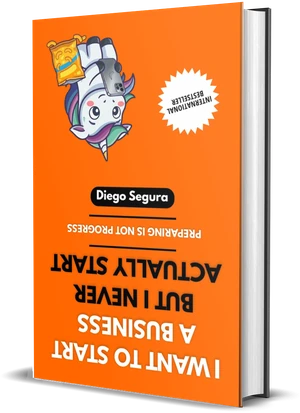
I Want to Start a Business but I Never Actually Start, chapter 3: What counts as started
Questions about correlation vs causation in startups.
What is the correlation vs causation in startups objection here?
It says visible acts like renting premises may simply be the business itself. So linking them to having a business could be circular.
Were the people still trying just lazy?
No. The paper describes them working steadily, saving money and preparing plans, but in a direction that produced no reply.
Has anyone tested private preparation against outside exposure?
Not directly, as far as the author can find. The text states clearly that this comparison has not been tested.
Read the whole chapter.
This lesson covers one section of chapter 3, “What counts as started”. The book goes further, with the full evidence, the stories and every exercise.
Lessons in this chapter.
- 01 Nobody has seen my business: the question to ask.
- 02 Who has seen my business idea: fill in one column.
- 03 Correlation vs causation in startups: what survives.
- 04 Nascent entrepreneurs study: what 71 people did.
- 05 First online sale story: eleven minutes, fifteen dollars.
- 06 Stealth mode startup: why it is not hiding.
- 07 Visible vs answerable: six ways your count breaks.