


















How Most Startups Are Funded: The Real Numbers.
The truth about how most startups are funded is plain: mostly with the founder's own money. In Amar Bhidé's 1992 study, over eighty per cent used personal savings and borrowing. Only five per cent had venture capital.
What Bhidé found in the Inc. 500.
Bhidé took the 1989 Inc. 500 list and interviewed a hundred founders. The inc 500 founders startup capital story surprised readers. The typical company started with less than thirty thousand dollars, with a median around ten thousand. Also, forty-one per cent had no business plan at all.
Three counts that disagree on how most startups are funded.
Other studies count differently. For example, one Kauffman report lists seven per cent venture capital, while the Tinbergen Institute finds four per cent. So the percentage of startups with venture capital shifts with each count. However, it keeps landing in single digits.
What you can safely take away.
Those ten thousand dollars are 1989 dollars, roughly twenty-five thousand today. That is still real money for most readers. But every count agrees on one thing. Most businesses begin on money from the founder or someone who loves them, and it is not fifty thousand in seed capital.
Check how most startups are funded against your plan.
Write where your own starting money could come from: savings, family, or your current income.
Then cross out any plan that depends on an investor saying yes first.
From the book.
A different Kauffman report says eighty-three per cent never touched a bank loan or venture capital at all, that around sixty-five per cent ran on personal and family savings, and that roughly one in ten was carrying a balance on a personal credit card. A study out of the Tinbergen Institute counts it differently again. Four per cent venture capital, three per cent angel, fifty-five per cent personal savings, twelve per cent family and friends.
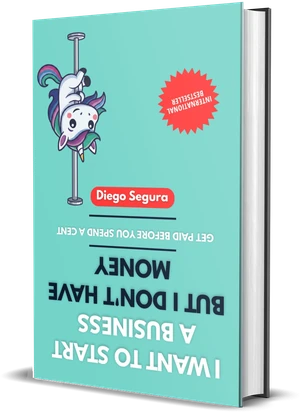
I Want to Start a Business but I Don't Have Money, chapter 1: The data that destroys the "need money" myth
Questions about how most startups are funded.
How most startups are funded, according to Bhidé?
More than eighty per cent used personal savings and personal borrowing. That often meant credit cards, second mortgages and family loans.
Did most fast-growing founders have a business plan?
No. Forty-one per cent had none, and another twenty-six per cent had only a rudimentary one.
Why do the funding studies disagree?
Each one counts differently and some leave gaps. Still, all of them show professional investors in single digits.
Read the whole chapter.
This lesson covers one section of chapter 1, “The data that destroys the "need money" myth”. The book goes further, with the full evidence, the stories and every exercise.
Lessons in this chapter.
- 01 Waiting for Funding Before Launching: Julian's Lesson.
- 02 How Most Startups Are Funded: The Real Numbers.
- 03 Started Business With 400 Dollars: Poppy & Pout.
- 04 Survivorship Bias in Startups: What the Data Hides.
- 05 How Many Startups Get Venture Capital: Two in a Thousand.
- 06 Epictetus Dichotomy of Control: Money and Your Power.
- 07 Startup Cost Worksheet: Find Your Real Number.
- 08 Essential vs Nice to Have Startup Costs: Two Walls.