


















Survivorship Bias in Entrepreneurship: The Empty Slot.
In short, survivorship bias in entrepreneurship means you only hear from people it worked for. For example, the author found one named person who escaped. That person did not want a business, and said so publicly. However, he did not find a single one.
The person who should have been easy to find.
In fact, every chapter in this book has a named human being, except this one. First, the author looked for someone who left mainly to escape and then closed the business. Indeed, he expected hundreds. Instead, case after case showed people who struggled and then succeeded, told from the far side.
How survivorship bias in entrepreneurship shapes your shelf.
Previously, chapter 2 showed what selecting on outcome does to a picture. Similarly, the same fault appears here again. After all, the person who closed quietly within eighteen months is not writing about it. As a result, your shelf holds successes plus failures who wrote about resilience.
Why the slot stays empty.
Of course, the author could have filled the slot with a woman who struggled for two years. Then he could have leaned on her middle and gone quiet about her happy ending. Indeed, books do that constantly. However, a chapter about self-deception that deceived you would not be worth your evening.
Correct for survivorship bias in entrepreneurship tonight.
First, list the founder stories you have read and mark which ones were told from the far side of success.
Then write down what you would expect to read if someone had quietly gone back to a job.
From the book.
I went looking for one person. Somebody who left a job mainly to escape it, started a business, worked out that they did not actually want to run a business, and then said so publicly with their name attached. That is exactly what this chapter warns you about, so I expected hundreds of them.
I Want to Start a Business but I Can't Quit My Job, chapter 8: The job might be the problem, and a business might not be the answer
Questions about survivorship bias in entrepreneurship.
Why does survivorship bias in entrepreneurship hide retreat stories?
Because there is no audience and no reward for telling them, they never get written.
Did the author find anyone who publicly went back to a job?
No. In fact, not a single account matched the description in his search.
Does one empty search prove these people do not exist?
No. After all, absence in one search is not proof of absence.
Read the whole chapter.
This lesson covers one section of chapter 8, “The job might be the problem, and a business might not be the answer”. The book goes further, with the full evidence, the stories and every exercise.
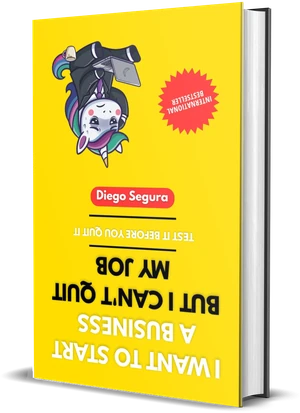
Lessons in this chapter.
- 01 Starting a Business After Unemployment: Escape Can Work.
- 02 Don't Know What to Sell: You Are Typical.
- 03 Motivations for Starting a Business: Escape vs Ambition.
- 04 Going Back to a Job After Self Employment: The Loop.
- 05 Marx Alienation of Labor: Does Owning Work Cure It.
- 06 Survivorship Bias in Entrepreneurship: The Empty Slot.
- 07 Do I Want a Business or Just to Quit: Two Columns.
- 08 Wrong Reasons to Start a Business: Why Motive Matters.