

















Outcome bias: why you grade choices by results.
Outcome bias means you rate the same decision as smarter when it happens to turn out well. In studies, people did this even after saying outcomes should not count. So you will probably do it to your own past choice too.
Five studies with only the ending changed.
Jonathan Baron and John Hershey published five studies in 1988 on exactly this question. People read about a medical decision or a gamble, then rated the thinking behind it. However, the decision, information and reasoning stayed identical every time. Only the result changed.
As a result, a good ending earned better ratings for the thinking. People also rated the decider as more competent and trusted them to decide again.
Why outcome bias survives you knowing about it.
The worrying part came first. Beforehand, those people said outcomes should not count when judging reasoning. Then they counted them anyway. Also, the original study had twenty subjects, so a 2023 pre-registered replication tested it with six hundred and ninety-two people. The effect did not shrink, it grew.
Even participants who explicitly said to ignore the outcome still showed the bias regardless.
The trade calls it resulting.
There is a name for this pattern: resulting in decision making. In short, it means judging decisions by results instead of by the thinking behind them. So in 2029 you will look at where you landed. Then you will reason backwards to a verdict on the person who decided in 2026, and never notice.
Plan for outcome bias before the result arrives.
Write one sentence admitting you will judge tonight's choice by how it turns out later.
Note the reasoning you hold right now, so a future you can compare it honestly.
From the book.
Jonathan Baron and John Hershey ran five studies and published them in the Journal of Personality and Social Psychology in 1988. They gave people the description of a decision made under uncertainty, a medical one or a gamble, and asked them to rate the quality of the thinking behind it, with the same decision and the same information and the same reasoning every time, so that the only thing that varied at all was how it happened to turn out.
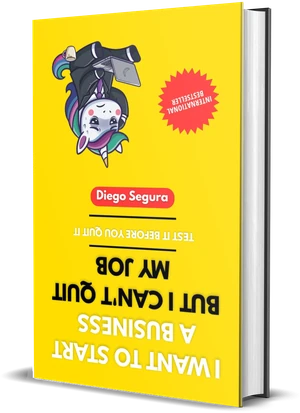
I Want to Start a Business but I Can't Quit My Job, chapter 14: A decision you can defend later
Questions about outcome bias.
Can I avoid outcome bias just by knowing about it?
No, sadly. In the 2023 replication, people who said outcomes should not count still showed the bias anyway.
How big were the studies behind this finding?
The original 1988 work had twenty subjects. The 2023 replication used six hundred and ninety-two people, and the effect grew rather than shrank.
What is the first step in dealing with it?
Accept that you will do it to yourself. Then record your reasoning before you know how things turn out.
Read the whole chapter.
This lesson covers one section of chapter 14, “A decision you can defend later”. The book goes further, with the full evidence, the stories and every exercise.
Lessons in this chapter.
- 01 Outcome bias: why you grade choices by results.
- 02 Regret of inaction: thinner than the coffee mug.
- 03 Why some regrets hurt more: the reason you gave.
- 04 Process vs outcome accountability: the case against.
- 05 Decision journal template: one signed page.
- 06 Business phone number banned: the mistake I can name.
- 07 Starting a business after failure: what data says.