Is self-employment worth it: the 35% answer.
Is self-employment worth it? For the typical person, the research says no: ten years after leaving a wage, the median person earned about 35% less. However, half did better than that, and the book shows what separates the two halves.
The number almost nobody sees.
James Hamilton published the figure in 2000, in the Journal of Political Economy. He followed people who left a salary to work for themselves. The person exactly in the middle was earning about a third less than if they had stayed.
Your instinct will soften that number. It will say those were the lazy ones, or the unlucky ones. But half of them did better and half did worse. So the ordinary outcome was paying a third of your income for the right to have no boss.
Is self-employment worth it for you?.
One study cannot answer that, and the book says so plainly. Hamilton's data covered American men in the 1980s. Moreover, the people who leave may simply be different from the people who stay. Nobody can run the real experiment, because you cannot live both lives and compare them.
Therefore treat the 35% as a warning rather than a verdict. It tells you what happened to most people. It says nothing certain about you.
What separates the two halves.
The split is mostly about the kind of business. Selling your own hours tends to land near the median. Owning something that earns without your hours tends to land above it. In short, the question is not whether to leave but which kind you would leave to build.
Price the dream before you buy it.
Write down your current salary. Then write 65% of it next to it, because that was the median result after ten years.
Ask yourself honestly: would I still choose this, knowingly, at that price? Keep the answer for the next lesson.
From the book.
That's the number James Hamilton published in 2000, in the Journal of Political Economy, after following people who had walked away from a wage to work for themselves. Ten years into the adventure, the person sitting exactly in the middle of that group was earning about thirty-five per cent less than they would have made if they had simply stayed where they were and done nothing.
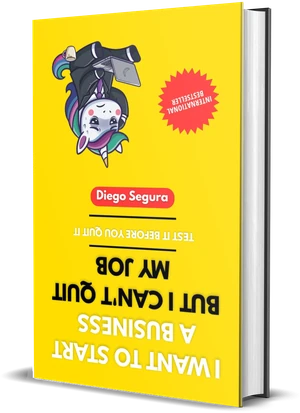
I Want to Start a Business but I Can't Quit My Job, chapter 1: Only one kind of self-employment pays
Questions about is self-employment worth it.
Is self-employment worth it financially?
On average, not for the typical person who sells their own hours. The median person in Hamilton's study earned about 35% less after ten years. Those who built businesses that run on other people's work did much better.
Why do people stay self-employed if they earn less?
Because they value the freedom. Hamilton's result suggests many people effectively pay part of their income for the right to decide when their day starts.
Does this research apply outside the United States?
Not directly. Taxes, expenses and safety nets differ by country, so the gap in your country may be bigger or smaller.
Read the whole chapter.
This lesson covers one section of chapter 1, “Only one kind of self-employment pays”. The book goes further, with the full evidence, the stories and every exercise.