














Employee Invention Laws by Country: Four Answers.
Employee invention laws by country vary far more than most people expect. Two people doing identical Sunday work can end up owning entirely different things. Therefore, you need to know which answer applies to you. Then read your clause with that answer in mind.
The US: protections with conditions attached.
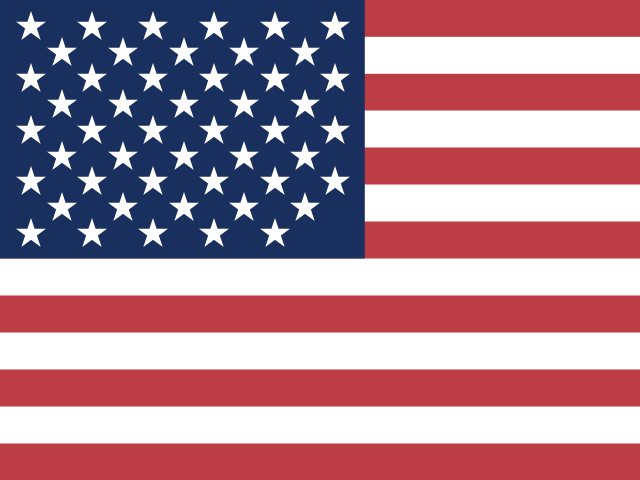
In the US it depends on your state. California Labor Code 2870 says an assignment clause doesn't apply to work made entirely on your own time. However, you must also avoid the employer's equipment, supplies, facilities or trade secrets. New York has section 203-f, and Minnesota, Utah, Kansas, Delaware and Illinois have versions too. Miss one condition and the protection is gone, and Texas has no such statute.
Employee Invention Laws by Country in Europe and Mexico.
In the UK, section 39 of the Patents Act 1977 asks only about normal duties. In 2007, in Liffe Administration and Management against Pinkava, an employee built something at home. He used his own time and equipment, but the employer still won because the work fell inside his job.
Germany's Employee Invention Act requires you to report a service invention promptly. Then the employer has four months to claim it, and you are also entitled to compensation. Mexico's Federal Labour Law, Article 163, starts with the inventor owning it, unless the employer commissioned the work.
Non-Competes and the Three Things to Check.
Also, the reach of a non compete clause side business owners signed varies widely. In the US, a court blocked the federal ban in 2024, so it is state by state. Britain presumes them unlawful. However, Germany enforces one for up to two years if the employer pays at least half your salary. Finally, check three things: duties versus everything, any own-time carve-out, and any outside work rule.
Check Employee Invention Laws by Country for You.
Write down which of the four country answers applies to you, or look up your own.
Note one line on your page: the clause is a problem for your plan, or it isn't.
From the book.
Non-competes vary just as much, and they moved recently. In the United States the Federal Trade Commission tried to ban them nationally, a court blocked the rule in 2024, and the Commission abandoned it, so there is no federal ban and the position is state by state. Four states void them outright. In Britain they are presumptively unlawful as a restraint of trade, and the employer has to prove the clause is reasonable. Germany will enforce one for up to two years, but only if the employer pays you at least half your old salary for the whole period, and France requires compensation too.
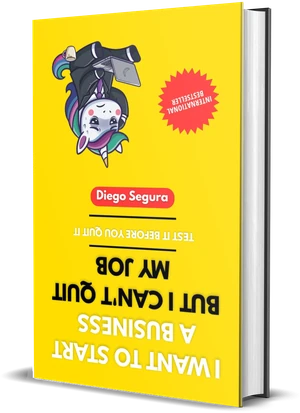
I Want to Start a Business but I Can't Quit My Job, chapter 10: What the double life costs
Questions about employee invention laws by country.
Why do employee invention laws by country matter so much?
Because the same Sunday work can belong to you in one country and to your employer in another.
Does working at home protect me in the UK?
Not necessarily. In the 2007 Pinkava case, home work on his own equipment still went to the employer.
Is this legal advice?
No. The author is a writer, not your lawyer, and the law changes faster than books get reprinted.
Read the whole chapter.
This lesson covers one section of chapter 10, “What the double life costs”. The book goes further, with the full evidence, the stories and every exercise.
Lessons in this chapter.
- 01 Who owns my side project: read the clause tonight.
- 02 Employee Invention Laws by Country: Four Answers.
- 03 Weekly Time Audit: Find Your Fifteen Real Hours.
- 04 Working 55 hours a week: why an end date matters.
- 05 Does loving your job prevent burnout: the real answer.
- 06 Attention residue: the two kinds of strain.
- 07 Why side projects get abandoned: who is waiting.