


















Blocked mobility entrepreneurship: the three doors.
Blocked mobility entrepreneurship treats starting a business as one of three moves: stay, take another offer, or build your own. When the first two doors close, the third looks better. However, Sørensen also found that large, old firms produce fewer founders than small, young ones.
Starting a business is just another move.
Jesper Sørensen and Amanda Sharkey published a paper in 2014 in the American Sociological Review. They argued founding is not a separate life decision. Instead, it belongs in the same family as changing jobs. You stand before three doors and pick whichever looks best. So the third door gains appeal every time another closes, though nothing about it changed.
The half of blocked mobility entrepreneurship nobody says.
Sørensen said blockage is not only failing to get ahead where you are. It is also failing to find a better job with another employer. Most people never test that market. As a result, they have never confirmed the second door is shut. Also note the limits: Danish records, the nineteen-nineties, and a model rather than an experiment.
Why the most blocked found the fewest firms.
In 2007, Sørensen found people in large, old firms start fewer businesses than people in small, young ones. This held even after accounting for who works where. He also checked self-selection, and it was not that. So blockage alone does not do it. Those places may remove the appetite along with the opportunity. Therefore blocked mobility entrepreneurship describes a condition, not a launchpad.
Check your own blocked mobility entrepreneurship story.
Write which of the three doors you have actually tested, and which you only assumed.
List what else you carry besides the ceiling, since blockage alone does not decide it.
From the book.
So blockage alone doesn't do it. Something about those places appears to remove the appetite along with the opportunity, and if that is right then a ceiling is not a launchpad, being stuck is not a qualification, and the years you spend under one may be taking something out of you as well as holding you in place. It is a condition, and whether it becomes anything depends on what else you're carrying. So what else are you carrying?
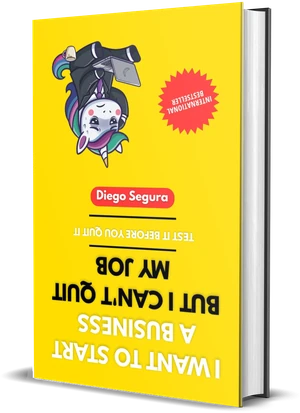
I Want to Start a Business but I Can't Quit My Job, chapter 5: Stuck is not the same as ready
Questions about blocked mobility entrepreneurship.
Does blocked mobility entrepreneurship prove being stuck causes businesses?
No. The model fits Danish data from the nineteen-nineties, but consistent with is not the same as caused by.
Why do big old firms produce fewer founders?
Sørensen found the effect was not self-selection. Something in those places appears to remove the appetite along with the opportunity.
Has anyone resolved this tension?
No. The researcher who found both halves has not resolved it, so the book leaves it open.
Read the whole chapter.
This lesson covers one section of chapter 5, “Stuck is not the same as ready”. The book goes further, with the full evidence, the stories and every exercise.
Lessons in this chapter.
- 01 Passed over for promotion: when skill is not the issue.
- 02 Opportunity vs necessity entrepreneurship: why it broke.
- 03 Test the job market: apply for three jobs.
- 04 Blocked mobility entrepreneurship: the three doors.
- 05 Why do employees really quit: the shock that starts it.
- 06 Nietzsche on work: the best policeman.
- 07 Immigrant self employment: the price of a shut door.
- 08 Running away from your job: does it disqualify you.